Streamlining financial dispute resolution
A clearer, decision-focused experience that helps merchants understand payment disputes, assess their options, and respond before critical deadlines.
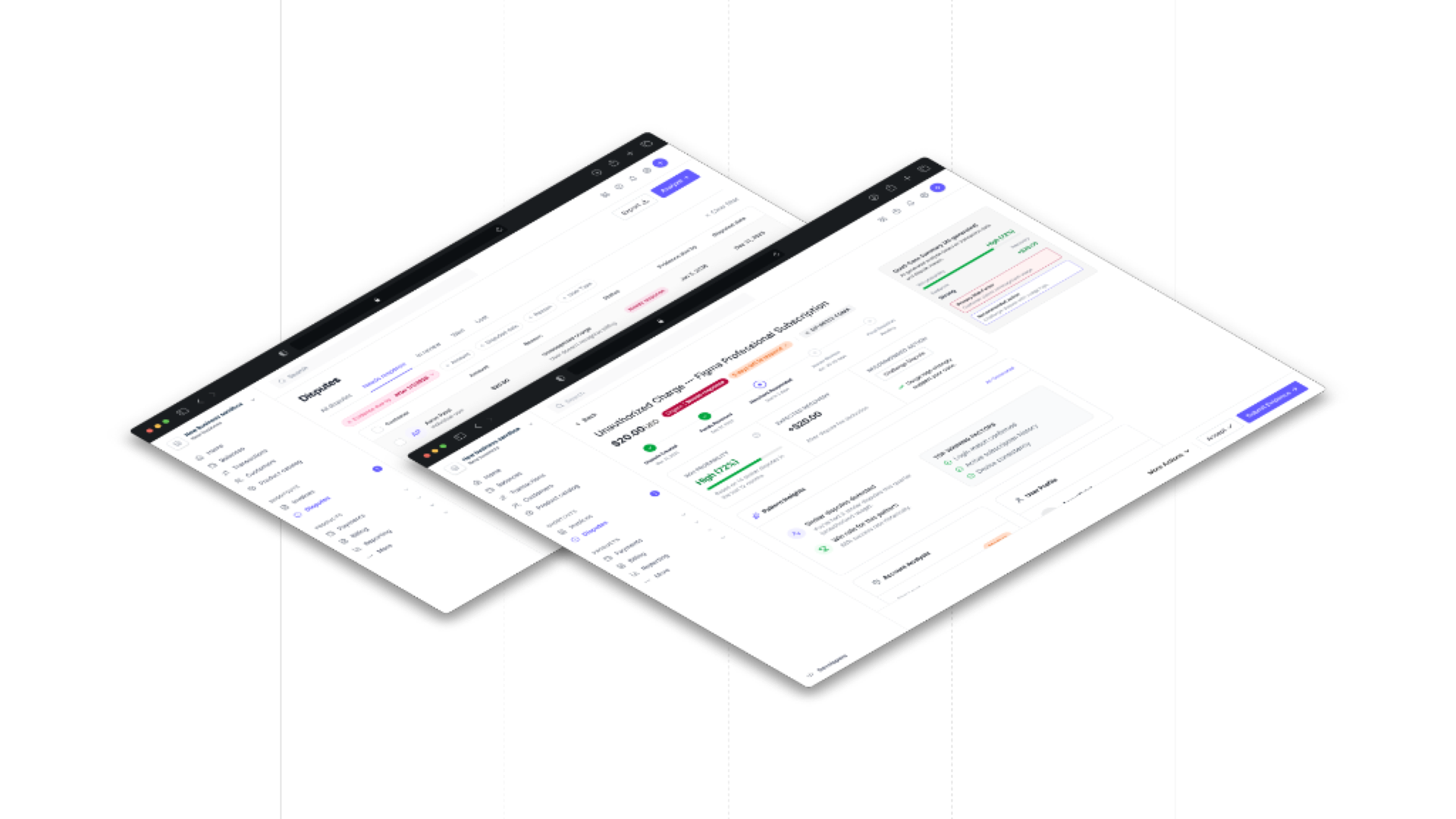
Navigating Financial Risk
Disputes involve financial risk, strict response deadlines, and decisions that can directly affect a merchant's revenue.
High-stakes decisions
Disputes involve financial risk, strict response deadlines, and decisions that can directly affect a merchant's revenue.
Unclear next steps
Merchants need to quickly understand what happened, what action is required, and whether they should accept or challenge a dispute.
Complex information
Evidence requirements, dispute status, deadlines, and financial details need to be understood without overwhelming the user.
The Product Approach
Our strategy focused on progressive disclosure and structuring complex financial workflows into clear decision pathways.
A decision-first workflow
The experience is structured around the decisions a merchant needs to make, making the next required action immediately clear.
Clearer status and hierarchy
Deadlines, dispute status, financial impact, and required actions are prioritized so critical information is easier to identify.
Reducing uncertainty
Case summaries, evidence guidance, and contextual recommendations help merchants understand their options before responding.
Designing the Workflow
The redesigned experience guides merchants from identifying urgent disputes to reviewing case details, preparing evidence, and tracking the outcome.
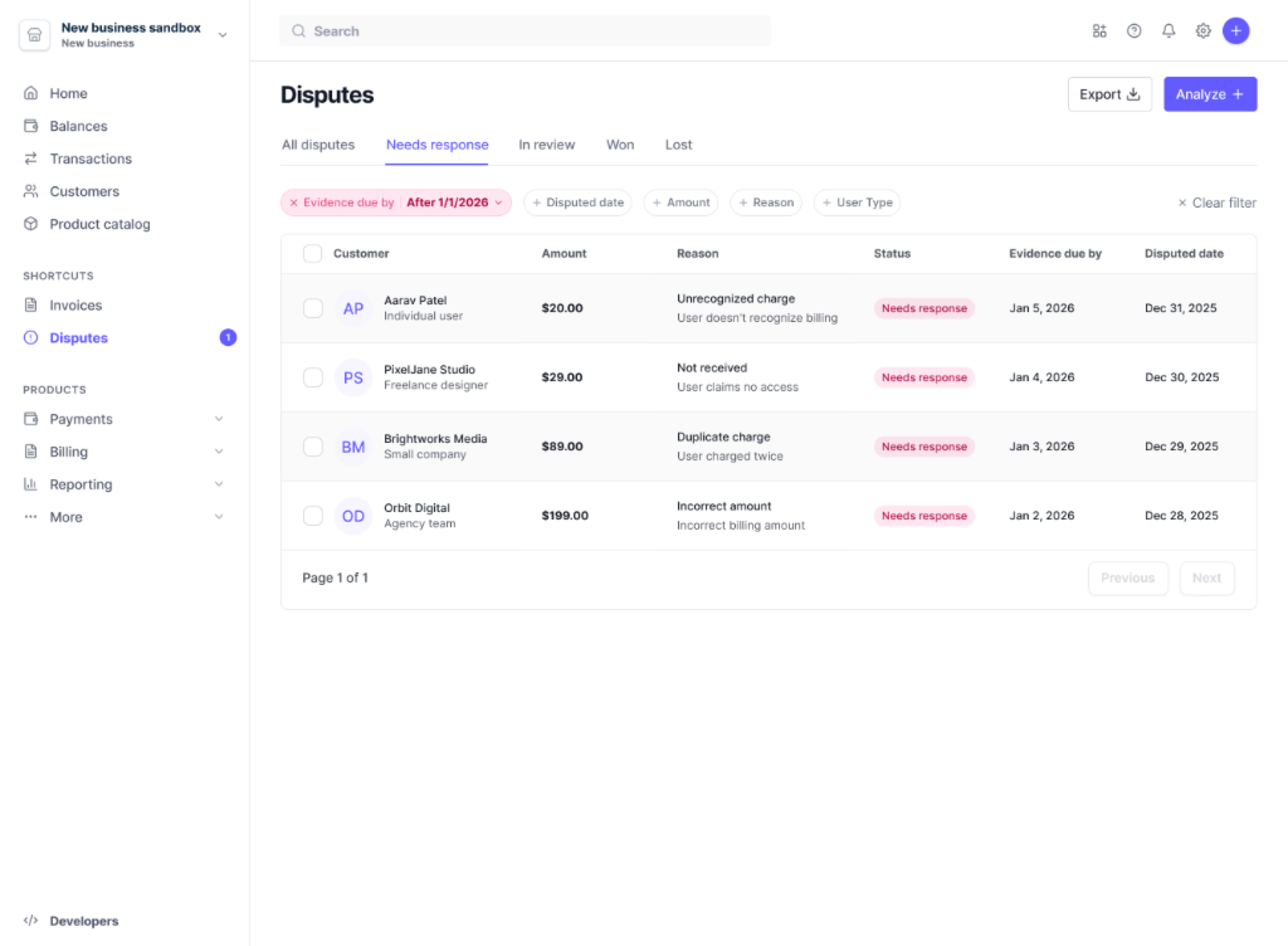
Dispute Overview
A prioritized view of active disputes, making response deadlines, amounts, and cases requiring attention easy to identify.
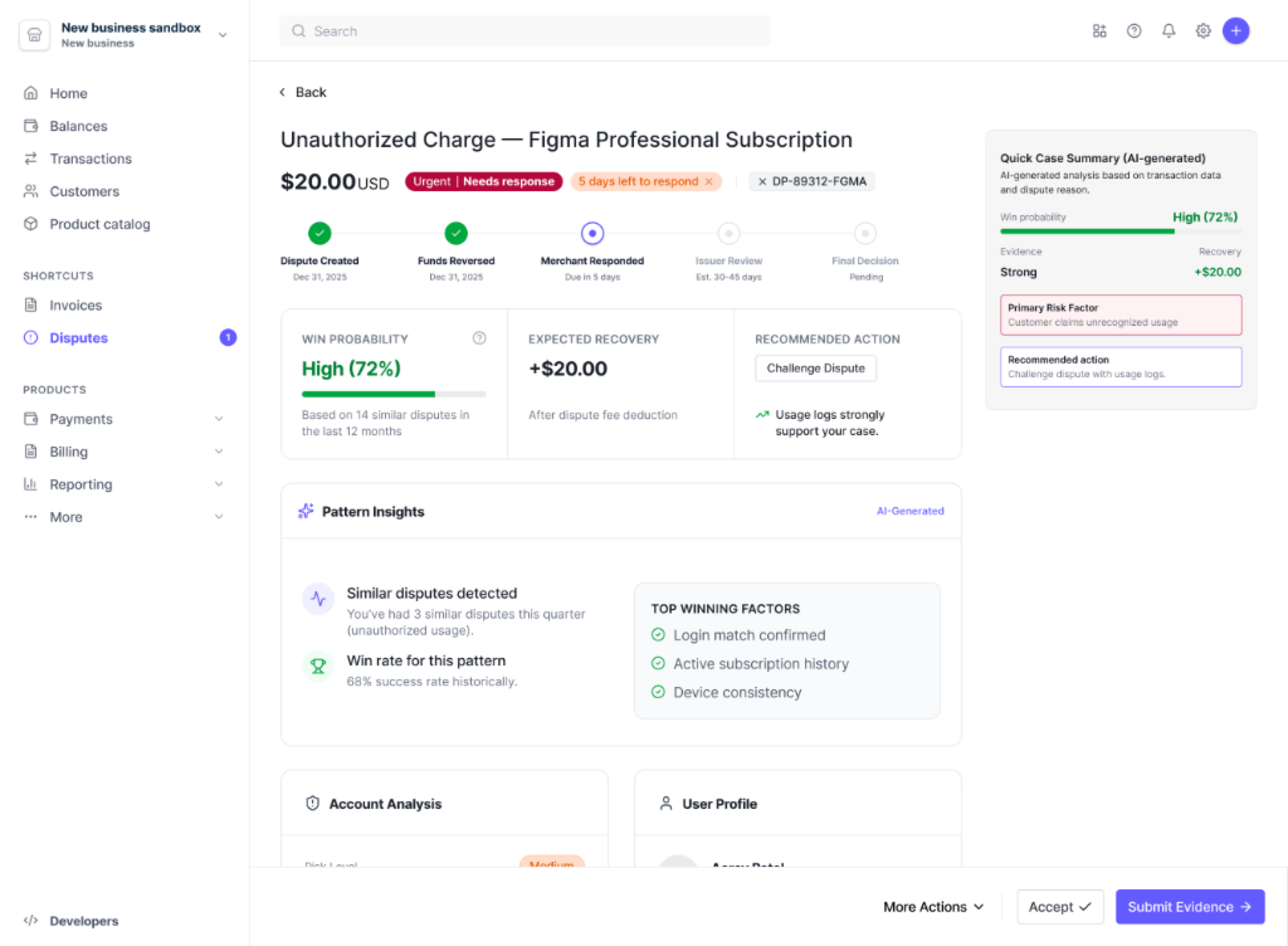
Case Details & Decision Support
Key dispute information is brought together with a concise case summary, recommended actions, and the information needed to decide whether to accept or challenge the dispute.
Evidence Review
Evidence requirements are organized into a clearer review flow, helping merchants understand what is available, what is missing, and what needs attention before submission.
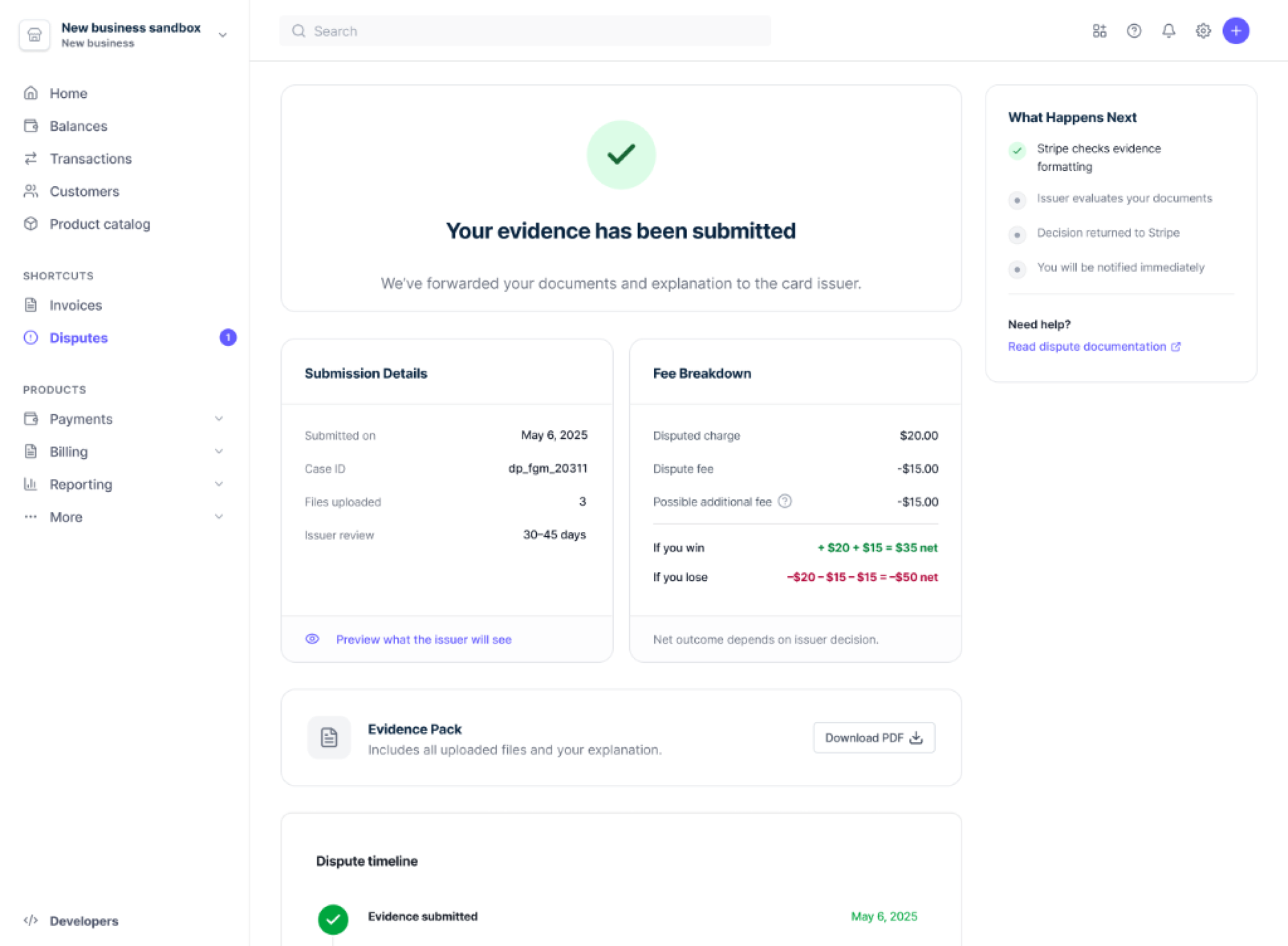
Response & Case Progress
After submission, the workflow provides a clear confirmation and timeline so merchants can understand the current state of the dispute and what happens next.
Design Outcome
A clearer path to action
The redesigned flow focuses attention on the decisions and actions required at each stage of a dispute.
Better visibility of critical information
Deadlines, financial impact, case status, and required actions are given stronger visual priority.
A more scalable dispute experience
The workflow establishes a structured foundation that can support different dispute states, evidence requirements, and merchant needs.